
Chester Education Foundation’s Chester Youth Deflection Initiative (CYDI) connects at-risk youth and their families with trusted local programs and services through a centralized, community-based hub. By addressing needs early, CYDI seeks to prevent justice-system involvement and promote greater safety, stability, and opportunity for Chester youth and their families.
The Chester Youth Deflection Initiative (CYDI) is a community-based effort led by the Chester Education Foundation (CEF) designed to interrupt at-risk Chester youth at the earliest point of contact with law enforcement and connect them to help before a low-level incident leads to deeper juvenile justice involvement. CYDI will build on CEF's existing Community Resource Hub in Chester, which already serves as a central point of access for youth, adults, and families seeking social services and youth opportunities. CYDI allows us to add a deflection pathway to the Hub so that eligible youth can receive assessment and connect to services as an alternative to arrest or formal court processing.
When done right, deflected kids have better outcomes than youth who are formally processed for low-level offenses. Research shows that deflected youth experience reductions in school discipline, delinquent behavior, rearrest, and recidivism when compared to their formally processed counterparts. Longer-term outcomes can be significant as well. Studies show that young people who are arrested and formally processed during adolescence are less likely to graduate from high school or enroll in college, marry less often, experience worse employment and earnings opportunities as adults and are at an increased risk for incarceration later in life. Overall, deflection of low-risk youth from deeper justice-system involvement can improve both public-safety outcomes and prospects for success in school, employment, and in adult life.
CYDI will serve youth ages 10 to 18 (or 8 to 17) who live within the Chester Upland School District. The initial focus will be young people involved in first-time, non-violent, low-level crimes (enumerated misdemeanors and summary offenses) who might otherwise be arrested or referred further into the juvenile justice system. Participation is intended to be voluntary and fairly administered, without regard to racial classification, gender, or socioeconomic factors.
The intervention will be individualized rather than a single program that every participant must complete. After police make the referral, Hub staff will conduct intake and a needs-based assessment to identify the young person's strengths, challenges, family circumstances, and service needs. A navigator will work with the youth and family to develop a success plan and make warm handoffs to appropriate providers. Depending on need, opportunities will include mental and behavioral health care, trauma support, mentoring, educational assistance, arts and cultural experiences, family-centered services, prosocial programming, workforce development and employment supports for older youth, and assistance with basic family needs among many other services.
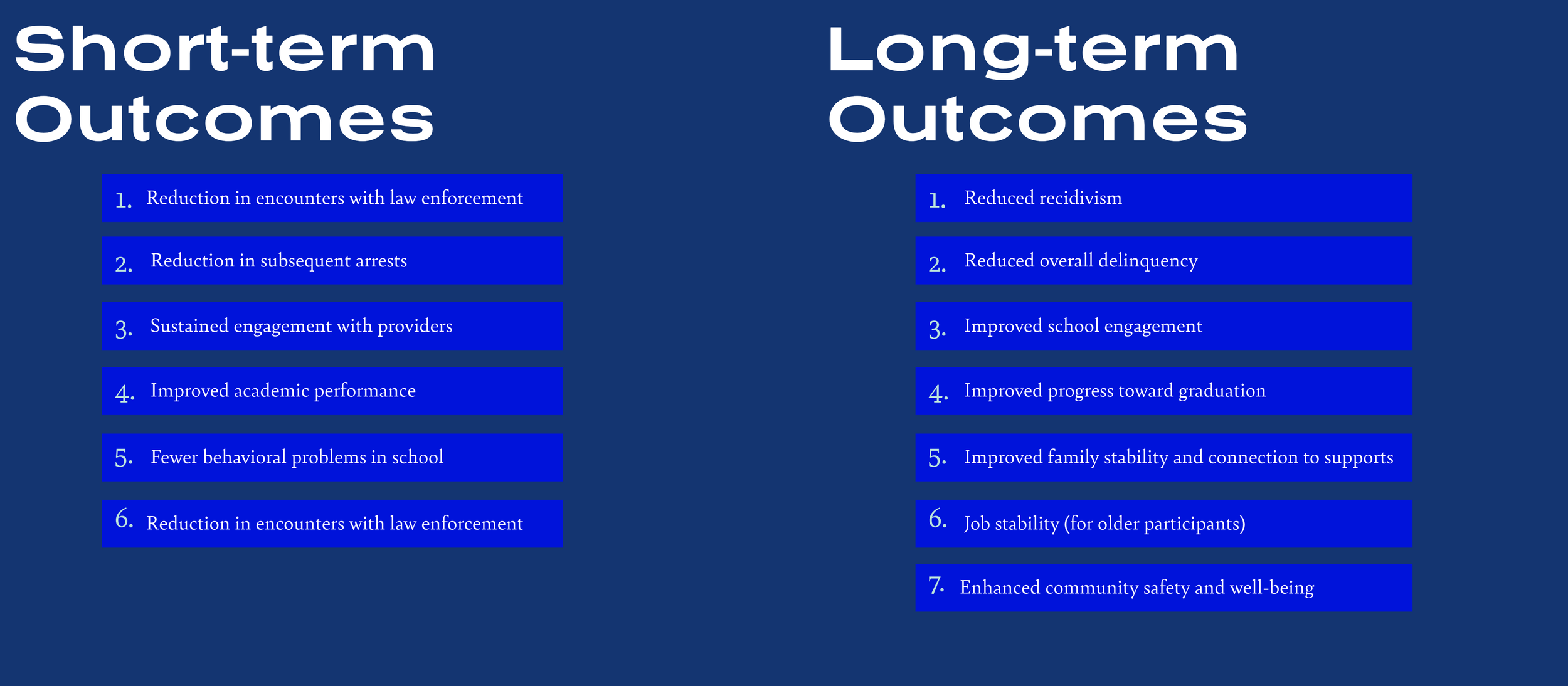
This approach is also expected to produce strong return on investment by reducing costly justice system involvement, improving educational engagement, and increasing access to workforce and behavioral health supports. Evidence consistently shows that early intervention strategies yield significant cost savings by avoiding the long-term societal costs associated with justice system involvement.
Our goal is to establish an effective, reliable, and sustainable pre-arrest deflection pathway for at-risk youth in Chester.